Elephant 3 Appliqué Sewing Pattern
First Impressions of the Design Personality
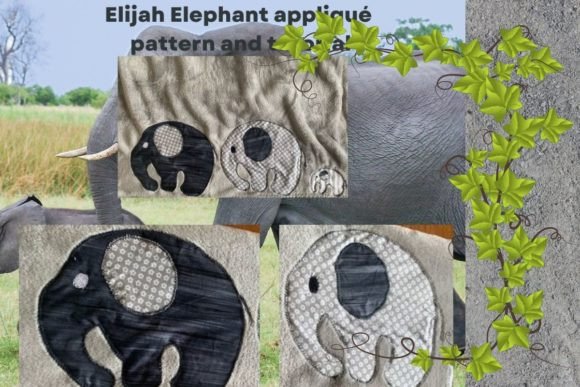
When I opened Elephant 3 Appliqué Sewing Pattern, the immediate feeling was warm, approachable, and quietly confident. The title itself suggests a collection of three distinct elephant motifs designed for raw-edge hand appliqué, which immediately tells me this isn’t a stiff, hyper-realistic animal graphic. It leans into a handmade, slightly rustic aesthetic that fits perfectly with small-batch production and craft-driven brands. As a professional embroidery designer, I evaluate any new embroidery file or pattern from a branding angle first, and this one carries a soft, storybook charm. It feels playful enough for a children’s boutique yet grounded enough for a sustainable café that wants to avoid corporate polish. The fact that it’s delivered as a digital embroidery file PDF for hand embroidery also hints at flexibility: you can scale the templates, adapt them to different thread colors, and maintain a human touch that machine-only work sometimes misses.
How Elephant 3 Appliqué Works in Real Business Use
Over the years I’ve seen countless animal embroidery file options, but few strike the balance between decorative charm and subtle brand messaging the way this set does. For small business merchandise, Elephant 3 Appliqué Sewing Pattern offers three variations, which means you can build a cohesive visual system without repeating the exact same mark. One template might work as a chest accent on a linen apron, another as a larger tote bag centerpiece, and a third as a delicate sleeve detail on a work shirt.
- Embroidered patches – Because these are raw-edge appliqué designs, they translate beautifully into handmade patches with visible fabric edges, giving the finished product a layered, tactile quality that customers instantly link to premium craftsmanship. I’d stitch them onto felt or canvas backing and offer them as sew-on or iron-on patches for a loyalty program gift.
- Staff uniforms and aprons – A friendly elephant silhouette on a barista apron or baker’s tunic feels far more welcoming than a sterile logo. It works especially well for florists, organic markets, and tea rooms where the brand story revolves around gentleness and care.
- Caps and accessories – One of the templates with a smaller, compact silhouette could sit neatly on the side of a cap or the brim without overwhelming the curve. I’d test it at a reduced size first because raw-edge appliqué on a cap embroidery surface demands careful hoop size and adhesive method.
- Tote bags and product packaging accents – An elephant design on a reusable canvas bag becomes a walking billboard. For brands that sell handmade goods, stitching the pattern directly onto cloth pouches or wrapping adds a distinctive, personal signature that mass-produced packaging cannot replicate.
- Etsy branding and craft business assets – Sellers who specialize in handmade home décor, nursery art, or baby gifts will find this pattern a smart addition. The three templates allow for a bundle listing or a tiered product offering, which raises average order value.
Where to Apply This Design Carefully
No embroidery file is universally perfect, and a responsible designer always maps out risk zones before production. With Elephant 3 Appliqué Sewing Pattern, the raw-edge nature defines both its beauty and its fragility. Because the pattern relies on exposed fabric edges, high stitch density around the perimeter is critical to prevent fraying, but if you pack too many securing stitches, the soft outline becomes stiff and unnatural. I’d recommend a medium satin‑stitch border or a deliberate raw‑edge finish sealed with a light fabric glue for items that won’t face heavy laundering.
- Small patch sizes – Shrinking the design below two inches risks losing the trunk curve and leg spacing. Before committing to a run of fifty patches, always stitch one sample at the final dimensions and check from a one‑meter viewing distance.
- Curved surfaces like cap fronts – The elephant’s rounded body may distort on a baseball cap curve if you don’t adjust the hoop size and use a cap‑specific backing. I’d perform a test fit on a structured cap and a relaxed dad hat to compare.
- Dark uniforms – If your brand palette is charcoal or black, the default template outlines might blend in. Invert the pattern or choose high‑contrast thread colors so the elephant doesn’t disappear on the fabric.
- Textured or loosely woven fabric – Burlap, heavy linen, and slubby cotton can fight with raw‑edge appliqué. Use a medium‑weight woven base and a firm stabilizer to prevent the substrate from distorting under stitch tension.
- Items needing frequent industrial washing – Without proper edge treatment, repeated hot water washes may lift the appliqué edges. For uniforms that go through commercial laundering, I’d digitize the design as a standard satin‑stitch machine embroidery design based on the same silhouette, while keeping the original hand‑stitched version for limited‑edition merchandise.
Brand Identity and Customer Trust Impact
When a customer touches an embroidered item, they make unconscious judgments about your business within seconds. A poorly executed patch feels cheap, but a considered appliqué like Elephant 3 Appliqué Sewing Pattern communicates that you invest time in the details. The three elephants—whether named Elly in the description or just referred to as a family—carry an emotional narrative that generic geometric logos lack. I’ve consulted for bakeries that replaced their plain text aprons with an animal appliqué and saw immediate improvement in customer engagement and social media mentions. The elephant is universally associated with memory, loyalty, and gentle strength, traits that elevate brand storytelling for a pet brand, a herbal skincare line, or a community bookshop.
Using this pattern as a repeated brand identity element—on packaging inserts, tote bags, and even the owner’s workshop coat—creates visual consistency. Customers begin to associate that specific raw‑edge elephant silhouette with quality and personal service. The finished product then commands a higher perceived value, which directly affects pricing power. Boutique merchandise buyers are especially drawn to layered, tactile designs because they signal that every piece received individual attention.
Practical Embroidery Designer Notes Before Production
Whenever I integrate a new Hand Embroidery Patterns asset into a commercial workflow, I run through a checklist that saves hours of rework. Start by printing the PDF templates exactly as provided, then compare them side‑by‑side to decide which elephant variant fits each product role. Because this is a Graphics‑type digital download, you maintain full control over scaling, but I strongly advise stitching a black‑and‑white sample first. This reveals any critical proportion issues and helps you evaluate the negative space around the trunk and tusks without the distraction of color.
- Test in black and white first – Remove color variables to assess silhouette clarity. A design that reads well in monochrome will almost always work in any palette.
- Confirm small patch legibility – Stitch the smallest acceptable size on scrap fabric and ask someone unfamiliar with the design if they immediately recognize the elephant. If they hesitate, enlarge the pattern slightly or adjust the trunk angle.
- Review thread color contrast – The raw‑edge style means your fabric choice and thread color must complement each other directly. I often pick a thread that is one shade darker than the appliqué fabric for the perimeter stitches, creating soft definition without a stark outline.
- Check spacing and hoop fit – The PDF likely doesn’t specify a hoop size for machine conversion, so map the design onto your embroidery software grid and allow at least 0.5 inch margin beyond the largest stitch point. If you plan to convert the templates into a machine embroidery design, ensure your digitizer accounts for the raw‑edge underlay stitching.
- Create a mockup for client approval – Use a printable mockup or take a high‑resolution photo of the stitched sample against the actual garment. Clients react differently to a digital proof than to a physical patch, and this step prevents locker shock.
- Compare alongside other design assets – If your brand already uses a wordmark or icon, place the elephant appliqué near it to check for harmony. The playful nature of Elephant 3 Appliqué Sewing Pattern may clash with a hyper‑minimalist typeface, so consider a hand‑drawn font pairing.
- Confirm commercial licensing before business use – The product description indicates it’s a DIY wild animal beginners pattern, but it is vital to verify whether the license allows you to stitch the design on items for sale. Contact the pattern creator if the terms aren’t explicit; never assume a personal‑use pattern automatically grants commercial embroidery rights.
Why This Pattern Earns a Place in a Pro Designer’s Toolkit
Not every design needs to scream for attention. The strength of Elephant 3 Appliqué Sewing Pattern lies in its quiet versatility. It can anchor a full small business merch line or become the subtle detail that makes a work shirt familiar and trustworthy. Over the years I’ve learned that the best design assets are those that work harder than expected—appearing on a recycled paper bag hanger one week, and on a staff retreat cap the next. This pattern, with its raw‑edge charm and three distinct silhouettes, offers precisely that kind of cross‑category utility. Whether you run an established shop or are just building your handmade product lineup, taking the time to sample, test, and thoughtfully place this elephant will reward you with merchandise that feels both personal and professional.