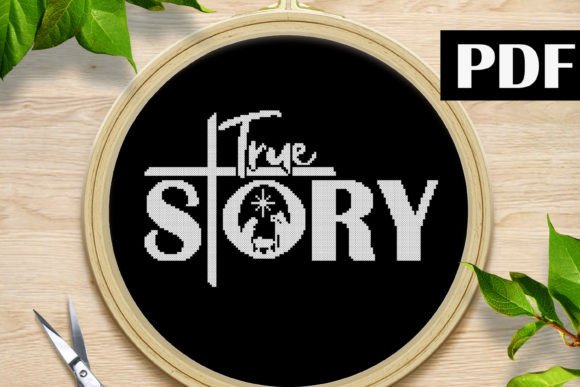
Nativity Cross Stitch Pattern PDF
As a working embroidery designer who stitches primarily for personalized gift orders, I look at a new pattern with one question: will this earn its place on my shelf and inside my customers’ most treasured keepsakes? When I opened the Nativity Cross Stitch Pattern PDF, I was not just looking at a digital file. I was imagining it finished on a baby blanket, softened by the drape of a kitchen towel, or framed over a newlywed couple’s pillow. That instinct, that immediate pull toward the finished product, is exactly what I hope for in a pattern. Here is how this design holds up under a practical, gift-maker’s lens.
The Instant Warmth of a Sacred Scene
The first impression is undeniably sweet and reverent without feeling stiff. The composition centers on the holy family, typically Mary, Joseph, and the infant in a manger, often framed by gentle animal silhouettes and a guiding star. The mood lands somewhere between classic Christmas nostalgia and a quiet handmade elegance. Because the design ships as a printable cross stitch pattern PDF, you get the blessing of studying the entire chart before a single thread is cut. I spent a long while just zooming in on the architecture of the stitching, how the color blocking creates soft halos around the figures, and how the backstitch details define tiny faces and delicate straw without overwhelming the piece. For anyone running a small shop that thrives on emotional products, a nativity scene like this has built-in storytelling. It communicates family tradition, spiritual reflection, and slow, mindful gifting all at once.
Where a Nativity Design Shines for Personalized Gifts
In my custom order workflow, I mentally sort patterns into “occasions and surfaces.” This one instantly hit several high-value categories. A personalized gift needs to feel intentional, and a hand-stitched nativity signals time, love, and purpose. Here are the product paths I am mapping out after reviewing the Nativity Cross Stitch Pattern PDF.
- Baby embroidery: Stitched on a cotton receiving blanket or a keepsake bib with the child’s name and birth date.
- Wedding gift: Paired with a couple’s monogram on a pillow cover or an heirloom table runner, especially for Christmas-season weddings.
- Family keepsakes: Worked into a wall hanging that families bring out each Advent. I add the family name and year under the scene.
- Personalized towels: A crisp flour-sack towel with the nativity on one corner, used as a holiday hostess gift or a bake sale item.
- Nursery decor: Framed in an embroidery hoop with the baby’s initial tucked inside the star.
- Tote bags and aprons: A large organic tote featuring the design becomes a church bag or a teacher gift.
- Craft fair products: Small, quickly finished ornaments or sachet covers sold at holiday markets.
- Etsy listings: A made-to-order pillow cover where the buyer sends a family name for the border.
- Printable mockup: Even before stitching, the clean PDF allows me to generate a digital placement preview so customers can approve the layout.
Choosing Surfaces and Fabrics With Care
I have learned the hard way that not every design transplants beautifully onto every surface. The Nativity Cross Stitch Pattern PDF, with its likely fine details and counted stitches, asks for thoughtful fabric selection. If you ignore this step, the emotional delicacy can turn into a blurry, frustrating mess. Here is where I plan to stitch with extra caution.
- Small lettering: If I add a name or date, I need to test the font scale against the nativity scale. Too tiny, and the text becomes unreadable lint.
- Delicate details: Faces, stars, and rays of light rely on contrast. Thread count on coarse fabric will eat those details whole.
- Textured fabric: Terry cloth towels or waffle weaves fight against clean crosses. I reserve this pattern for smooth, high-thread-count linens and evenweave cotton.
- Thick towels: The pile depth buries floss. If a client insists on a towel, I use a tightly woven huck towel or stitch on a separate linen patch that gets appliquéd.
- Stretchy baby clothes: Knit onesies are a gamble. Without heavy-duty stabilizer and waste canvas, the nativity figures warp. I lean toward woven garments or quilt blocks.
- Curved surfaces: Pillow covers with piping near the seam, curved tote edges, and sleeve cuffs demand a reduced design size so the scene doesn’t buckle.
- Dark fabric: Deep navy or burgundy can create a dramatic night-sky backdrop, but pale thread colors like ivory, gold, and light blue need a stitch test. I often bump up the contrast or add a subtle backstitch outline.
- Frequent washing: Anything destined for a washing machine, like kitchen linens, gets knots secured with a backstitch lock and colorfast, preshrunk floss.
How This Design Lifts Your Shop’s Handmade Quality
When I evaluate a cross stitch pattern for my line, I am measuring more than stitch count. I am measuring perceived value. A finished product stitched from the Nativity Cross Stitch Pattern PDF carries a quiet authority. Customers recognize the workmanship instantly, and that recognition builds trust before they even read the product description. This design specifically elevates several key areas.
Giftability: A nativity piece feels like an heirloom even when fresh from the hoop. It gets folded carefully, wrapped with intention, and rarely ends up in a donation pile. For my shop, that means higher customer satisfaction and stronger word-of-mouth referrals during the holiday season.
Emotional connection: When a buyer sees the stitched manger scene on a baby embroidery blanket or a wedding gift pillow, they are not just buying a product. They are buying a moment of silence in a busy world. That reaction translates directly into engagement on product photography, especially when I style the piece near candles, linen textures, or warm wood surfaces.
Customer trust: Because the pattern is delivered as a printable digital embroidery file, I can show them a mockup before I stitch. The PDF’s clarity matters here. If the chart is crisp and well-symbolized, my preview looks professional, and the buyer feels confident approving the custom order.
Product photography: Once finished, the stitched texture photographs beautifully in soft, directional light. The raised crosses create shadow and depth that print-on-demand products simply cannot achieve. For my Etsy listings, these textures in close-up shots are what stop a scroll and drive the click.
Practical Stitching Notes From a Production Mind
Before I ever sell a single finished piece using the Nativity Cross Stitch Pattern PDF, I run through a small checklist that saves me from costly remakes and disappointed faces. These are the steps I recommend to every fellow embroidery maker, gift shop owner, and craft fair seller who plans to turn this pattern into a purchasable handmade product.
- Test on scrap fabric first: I stitch a small section, usually the star and part of Mary’s robe, to check how the chosen thread colors behave on the exact fabric I plan to sell.
- Check thread color contrast: Screen colors lie. I lay my floss selections on the fabric under natural light and also under warm indoor lighting to mimic home display conditions.
- Confirm finished size and hoop: I measure the design area on the chart, multiplying by fabric count, then add a generous margin for framing or seam allowance. My go-to hoops for this pattern range from small ornament sizes to medium display hoops.
- Review stitch density: The PDF reveals areas of heavy confetti stitching versus open negative space. I note any sections that might pull or pucker and adjust my tension or hoop tightness there.
- Use proper stabilizer: For tote bags and towels, a tear-away or water-soluble base fabric stabilizer is non-negotiable. For apparel, I fuse a lightweight, non-stretch interfacing behind the stitching zone.
- Compare light and dark fabric mockups: I often scan or photograph the printed chart, overlay it digitally onto photos of my blank products, and offer two fabric color options to the buyer before I thread the needle.
- Check small details after stitching: Eyes, manger lines, and star points get a final inspection under a magnifying lamp. Any loose crosses get a quick nip and tuck before the piece is pressed.
- Verify commercial licensing: I cannot say this loudly enough. The product description mentions a digital pattern available for printing. Before I list a finished product for sale, I read the designer’s terms carefully. Some artists allow limited physical sales; others require an extended license. Always confirm so your handmade business stays above board with commercial embroidery use.
A Design Worth the Shelf Space
After spending several hours with the Nativity Cross Stitch Pattern PDF, from the first chart review to a test stitch on a linen pillow cover mockup, I feel genuinely good about its place in a personalized gift lineup. It does not shout for attention. It whispers, and that whisper sells beautifully to customers who understand the value of quiet handwork. The pattern suits an array of meaningful products, from custom embroidery baby blankets to wedding samplers and holiday keepsakes. It asks the maker to be patient with small details and thoughtful with fabric choices, but that discipline only adds to the final perceived value. For the Etsy seller, the craft fair vendor, or the family-run embroidery studio, a well-executed nativity design like this is a quiet anchor for a whole season of gift orders. I will be stitching it into multiple shop samples and keeping the PDF close at hand.