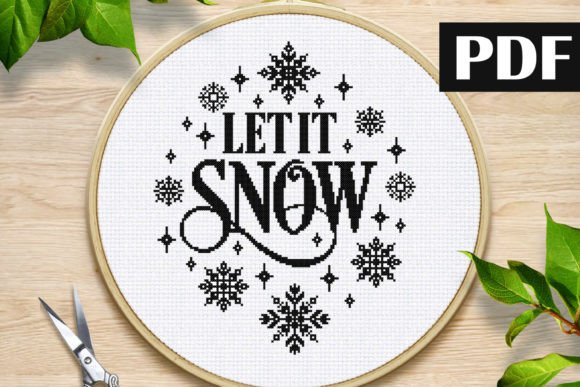
Let It Snow Cross Stitch Pattern PDF
When I pulled up Let It Snow Cross Stitch Pattern PDF on my tablet late last night, my first thought was simple: this one has booth potential. I have spent years testing embroidery designs for weekend markets, Etsy shop drops, and custom wholesale orders. Some patterns look great on a screen but fall apart on fabric. Others photograph beautifully but take too long to stitch for batch production. Let It Snow Cross Stitch Pattern PDF landed somewhere honest. It felt crisp, familiar, and emotionally easy to sell. The title alone carries that nostalgic winter charm that pulls people toward a display table before they even see the stitching.
Based on the product description provided by the designer, this listing is a digital cross stitch pattern available for printing or viewing on a computer. It comes in a print-friendly version. That tells me immediately that this is designed for hand embroidery rather than machine files. For craft fair sellers who love creating handmade products with needle and thread, that distinction matters. A digital pattern like this gives full control over fabric choice, thread colors, and finished size. But before I commit to any design for my booth inventory, I run through a mental checklist. Here is exactly how I evaluated Let It Snow Cross Stitch Pattern PDF for real-world selling.
First Impression And The Emotion Behind The Design
The words "Let It Snow" hit differently depending on the style. Some versions feel cutesy and childlike. Others lean elegant, almost like a holiday greeting card from a boutique stationery shop. Without seeing the actual graphics, the title suggests a seasonal winter theme that could work across multiple aesthetics. If the lettering is clean and the accompanying motifs stay balanced, this design could read as farmhouse cozy, modern minimalist, or classic festive. That versatility is gold at a craft fair. When a customer can imagine the finished product in their own kitchen, on their front door wreath hanger, or wrapped under a tree as a handmade gift, the sale happens faster.
What I appreciate most about seasonal cross stitch patterns like this is the instant recognition. A shopper walking past my booth does not have ten seconds to decode a complicated design. They need to feel something immediately. Let It Snow Cross Stitch Pattern PDF promises that quick emotional hook. The phrase is universally wintery, not tied to a specific holiday, which extends the selling window from November straight through February. That longer selling season makes this pattern more valuable as a craft fair product.
How The Pattern Performs On Real Craft Fair Products
My brain immediately maps any embroidery design onto the products I know sell. For Let It Snow Cross Stitch Pattern PDF, I started with tea towels and kitchen textiles. A white or oatmeal linen tea towel with this design stitched near the hem in icy blue or deep navy thread would stop someone mid-stride at a holiday market. Tea towels are my consistent bestseller because they feel practical and giftable. Customers pick them up, touch the fabric, and imagine them hanging in their own home.
Tote bags rank close behind. A natural cotton tote with the cross stitch pattern centered on the front pocket or main panel turns a utilitarian item into a winter statement piece. Shoppers at handmade markets love reusable bags, especially when the design feels seasonal but not overly specific. Let It Snow Cross Stitch Pattern PDF on a tote bag works for grocery runs, library trips, and gift packaging. That functional beauty increases the perceived value of the finished product.
Aprons and pillow covers offer a slightly higher price point. An apron with this design embroidered near the bib creates a cozy baking vibe that sells well in November and December. Pillow covers give me the chance to pair the cross stitch with coordinating fabrics and sell them as sets. Even small zipper pouches and fabric coin purses become miniature canvases. With a pattern like this, reducing the design to fit a smaller hoop size opens up lower-priced impulse buy items that round out a booth display beautifully.
Embroidered patches deserve their own mention. If the lettering and any snowflake or accent motifs remain clear when stitched small, Let It Snow Cross Stitch Pattern PDF could translate into a sew-on or iron-on patch. Patches sell fast at craft fairs because they are affordable, collectible, and easy for customers to apply to denim jackets, backpacks, or beanies. I always keep a basket of seasonal patches near the checkout area because they become add-on purchases without much conversation needed.
Practical Selling Points And Production Considerations
As an embroidery designer testing patterns for market inventory, I think about three things simultaneously: stitch time, visual clarity, and photography potential. Let It Snow Cross Stitch Pattern PDF needs to read clearly at arm's length. If someone stands three feet from my booth table, can they immediately understand what the stitched piece says? Lettering designs live or die by spacing. If the text feels cramped or the surrounding decorative elements crowd the words, the message gets lost. I will test this on scrap fabric first, checking whether the phrase scans quickly from a distance.
Photography matters enormously for online listings. As an Etsy seller, I know that the same design that looks charming in person can photograph poorly if the stitch colors blend into the fabric or the contrast feels weak. When I stitch a sample of Let It Snow Cross Stitch Pattern PDF, I will photograph it against neutral backgrounds, in natural window light, and include at least one lifestyle shot showing the finished product styled in a real space. Those images drive engagement on Etsy listings and social media posts alike.
Batch production is another key factor. A pattern that takes six hours per piece is a labor of love, but it limits how many finished products I can bring to a craft fair. I need to gauge whether Let It Snow Cross Stitch Pattern PDF stitches efficiently enough to produce multiple tea towels, a few tote bags, and some smaller pouch designs within a reasonable timeframe. If the design includes dense fill areas or lots of color changes, that timeline stretches. I appreciate the practicality of a print-friendly version because it suggests the pattern is clean and legible on paper, which often correlates with stitch efficiency.
Where This Design Could Lose Clarity
Every embroidery designer learns hard lessons about what fails. I want to share the careful-use notes that come to mind when I evaluate Let It Snow Cross Stitch Pattern PDF before committing it to my product line.
Small lettering is unforgiving. If this pattern includes delicate script or tiny snowflake details, shrinking it too far will muddy the stitches. I advise testing the design at the intended hoop size on a fabric swatch that matches the final product texture. What looks crisp on smooth cotton may blur on a textured towel or loosely woven linen. Thick fabrics like canvas or terry cloth can distort fine details, so I avoid pushing a delicate design onto those surfaces without adjusting stitch density and stabilizer choice.
Dark fabric demands contrast. A design stitched in pale blue or white on a natural linen fabric will stand out beautifully. The same design on a dark navy or charcoal fabric might require brighter thread or a white outline to maintain legibility. I plan to test thread colors against multiple fabric swatches before finalizing my product samples. This step saves hours of frustration and wasted materials.
Curved surfaces complicate placement. Caps, structured pouches, and some tote bag panels do not offer a flat stitching plane. Cross stitch works best on even-weave fabrics and stable surfaces. I will likely avoid curved or heavily structured items and focus on flat textile products that showcase the hand-stitched quality of Let It Snow Cross Stitch Pattern PDF.
Dense stitch areas require patience. If the design incorporates solid blocks of stitching for letters or decorative shapes, the fabric underneath can pucker without proper hooping and tension. I always use a quality stabilizer appropriate for the fabric weight, and I re-hoop carefully to maintain even tension throughout.
How The Design Affects Booth Display Strength
At a craft fair, visual consistency across a product line creates brand identity. Let It Snow Cross Stitch Pattern PDF gives me a seasonal anchor design that I can repeat across multiple product types, creating a cohesive collection. When a customer sees the same charming lettering on a tote bag, then again on a tea towel, and once more on a pillow cover, they recognize the style. That recognition builds trust faster than any signage I could hang.
Handmade quality shines brightest when the stitch work feels intentional and clean. Customers at handmade markets value the visible time and skill woven into each product. A cross stitch design with even tension, thoughtful color choices, and a well-finished back communicates care. I display my finished pieces with the backing visible on at least one sample, because that transparency reassures buyers about craftsmanship.
Buyer engagement increases when a design sparks conversation. Winter phrases like "Let It Snow" invite casual comments about favorite holiday traditions, recent weather, or gift shopping plans. That conversational doorway matters in a market setting where rapport leads to sales. A design that feels warm and relatable keeps people at the table longer, browsing more products, and ultimately filling their shopping bags.
Designer Notes Before Stitching For Sale
Before I turn Let It Snow Cross Stitch Pattern PDF into finished craft fair products, I run through my standard production checklist. I recommend every handmade seller do the same, especially if you are new to commercial embroidery or building inventory for your first market.
Start by stitching a test sample on the exact fabric you plan to sell. This is non-negotiable. A pattern that looks flawless on paper can shift dramatically on fabric with different weave and drape. Check thread contrast under both daylight and warm indoor lighting, because market booths often sit under mixed artificial light. Review the spacing between letters and design elements, and confirm that the recommended hoop size comfortably fits the full design without crowding the edges.
Inspect stitch density carefully. Dense areas can make the fabric stiff, which affects how a tea towel hangs or how a tote bag flexes. If the pattern includes tiny details, assess whether those details remain distinct at the final stitched scale. Use the right stabilizer for your chosen fabric. A cut-away stabilizer works best for stretchy or loosely woven fabrics, while a tear-away option suits stable cottons and linens.
Create at least one real mockup, not just a digital visualization. Stitch the finished design, mount it on the actual product, and photograph it as you would for an Etsy listing. This hands-on mockup reveals issues that no screen preview can show. I also compare at least three fabric color options to see which background makes the thread colors sing.
Finally, confirm commercial licensing before selling any finished products made from this pattern. The product description provided by the designer mentions a digital cross stitch listing, but does not specify commercial use terms for finished goods. I strongly recommend reading the full listing details, reaching out to the pattern designer directly if needed, and keeping written documentation of any permissions granted. Selling handmade products at craft fairs and on Etsy carries legal and ethical obligations regarding intellectual property.
Final Assessment As A Market Seller
Let It Snow Cross Stitch Pattern PDF earns a strong spot in my seasonal product lineup. The design concept is instantly marketable, emotionally warm, and versatile enough to span multiple handmade product categories. From tea towels and tote bags to patches and pillow covers, this pattern adapts well to the items I know sell consistently at winter craft fairs. The print-friendly format suggests a clean, readable design that should translate effectively from paper to fabric with proper preparation.
My one remaining task is to stitch the sample and photograph it beautifully. Once I see how the thread interacts with my chosen fabrics and confirm the production time per piece, I will finalize pricing. For craft fair sellers, embroidery business owners, and handmade shop entrepreneurs looking for a seasonal cross stitch pattern with broad appeal, Let It Snow Cross Stitch Pattern PDF is worth serious consideration. The phrase sells itself. The stitching makes it special.