Hamsa Hand Cross Stitch Pattern Review
First Look at Hamsa Hand Cross Stitch Pattern
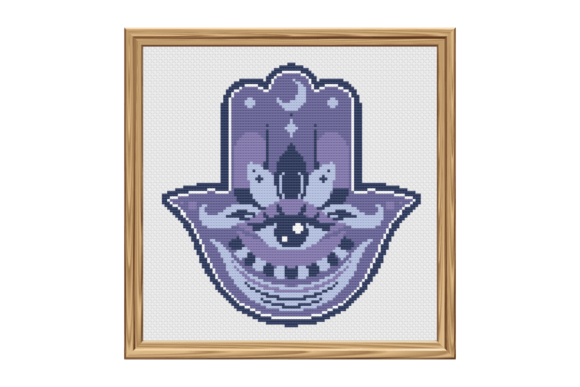
Opening the Hamsa Hand Cross Stitch Pattern file feels like uncovering a small talisman meant for fabric. The motif carries an immediate sense of protection and calm, which is exactly what the product description promises: cleanse your negative energy. As an embroidery designer who stitches primarily for boutique sweatshirt collections, I look for patterns that carry symbolic weight without overwhelming the garment. This one lands gracefully between decorative charm and minimalist intention. The hamsa hand shape reads clearly, and the cross-stitch styling suggests a handcrafted texture that would translate beautifully into thread on fleece, French terry, or loopback cotton.
The mood is gentle but grounded. It feels thoughtful rather than loud. If you picture a finished sweatshirt hanging in a small online shop, this design whispers handmade integrity. It does not scream for attention, yet the eye settles on it naturally. That quality matters enormously for boutique brands trying to build trust with customers who want apparel that feels personal and intentional. The Hamsa Hand Cross Stitch Pattern has a quiet confidence that aligns well with lifestyle-focused clothing lines.
Stitching Personality and Visual Weight
Cross stitch as a visual language carries nostalgia. It reminds people of slow craft, heirloom pieces, and careful handwork. When rendered as a machine embroidery design, that aesthetic can either shine or fall flat depending on stitch density and layout choices. The Hamsa Hand Cross Stitch Pattern offers a graphic structure that reads almost like a filled cross-stitch sampler motif. The repetitive X-shaped texture would create a lovely matte surface on a sweatshirt, contrasting softly against the fabric nap.
I would classify the design personality as rustic yet refined. It leans feminine but not overly delicate. For a boutique brand, this strikes a versatile balance. You could pair it with organic cotton sweatshirts in oat, clay, sage, or dusty rose and the design would feel harmonious. On dark fabric like charcoal or deep navy, the thread colors would need careful selection to maintain legibility and symbolic clarity. The hamsa outline, the inner geometric details, and any small accent shapes must hold their own against a dark ground without becoming muddy. This is where thread color contrast becomes critical during the digitizing or stitching setup phase.
Translating the Pattern to Sweatshirt Embroidery
When I evaluate a digital embroidery file for custom apparel, I immediately imagine it on multiple placements. For this hamsa design, the chest placement on a crewneck or hoodie feels like the most natural home. A left-chest embroidery, roughly four to five inches tall, would give the motif enough room to breathe while maintaining a clean, wearable scale. The design also tempts me toward a sleeve accent application. A smaller version stitched on the forearm or upper sleeve of an oversized hoodie could feel surprisingly fresh and editorial. For back designs, scaling the pattern larger would require close scrutiny of stitch density. Too dense on a large scale and you risk stiffening the garment and creating a patch-like shield that fights the softness of the sweatshirt. Too light, and the cross-stitch texture might look sparse and underfilled.
The product description states the download includes a PDF file with instructions. This matters because a well-written instruction sheet can guide hoop size selection, color mapping, and placement alignment. For Etsy sellers and small shop product creators who may be newer to commercial embroidery, clear guidance reduces the trial-and-error phase significantly. I always recommend testing the design on a fabric swatch that matches your actual sweatshirt weight before committing to a full production run. Fabric texture plays tricks on cross-stitch-style designs. A thick loopback fleece will swallow fine details differently than a smooth-faced French terry.
Sweatshirt Collection Mood and Color Pairings
Imagining a limited seasonal drop around this pattern, I picture a tightly curated color palette. Neutral sweatshirts in cream, heather grey, and mushroom would let the hamsa design act as a subtle focal point. For pastel colors like lavender, soft mint, or butter yellow, the pattern would feel airy and almost talismanic. On richer tones like terracotta, cinnamon, or olive, the design takes on an earthy, grounded presence that suits autumn and winter collections. The design does not read as overtly playful or cute. It holds more gravity than that. I would describe it as soulful, decorative, and quietly bold. It would suit a brand identity built around mindfulness, slow fashion, or spiritual wellness aesthetics.
For hoodie design mockups and printable mockup presentations, the cross-stitch texture adds visual interest even in digital previews. Customers browsing an Etsy listing respond to texture cues. When they see a design that looks stitched rather than screen-printed, it signals care and craft value. The Hamsa Hand Cross Stitch Pattern delivers that signal clearly. I would position it as a premium option within a sweatshirt line, perhaps as a featured piece rather than a basic staple.
Technical Considerations Before Stitching
Every embroidery designer knows that a beautiful graphic does not always make a beautiful stitched product. The conversion from Graphics to thread requires attention to stitch density, underlay, pull compensation, and hoop size compatibility. Since this product falls under Cross Stitch Patterns, the graphic likely references a counted cross-stitch aesthetic. The embroidery file or instruction PDF should clarify whether this is a true counted pattern for hand embroidery or a digitized file ready for machine execution. For machine embroidery design use, I would want to confirm the file formats included, as the product description does not specify them. Before investing time into a production run, verify you have the correct file types for your embroidery machine.
Stabilizer choice plays a huge role in how the finished design wears over time. Sweatshirt fabric stretches, pulls, and moves with the body. A cross-stitch-style fill can distort if the stabilizer is too light or if the hooping tension is inconsistent. I recommend a medium-weight cutaway stabilizer for fleece-backed sweatshirts. It supports the density without adding stiffness. For fabric thickness variations, always test on the exact garment you plan to sell. The same design stitched on a lightweight French terry hoodie will behave differently on a heavy 400-gram cotton fleece.
Washing durability is another factor I never skip. Thread colors must hold fast through repeated laundering. The hamsa design, with its symbolic resonance, will likely become a favorite piece for the buyer. They will wash it often. Choose high-quality polyester embroidery thread with good colorfastness. The design needs to look as intentional after twenty washes as it does fresh off the hoop.
Small-Size Readability and Detail Preservation
Scaling the Hamsa Hand Cross Stitch Pattern down for sleeve accents or kids' sweatshirts introduces readability challenges. The cross-stitch motifs rely on visible X-shaped units. At very small sizes, those units can blur together into a solid fill, losing the cross-stitch identity entirely. I would maintain a minimum width of around three inches for the main hamsa shape to preserve the handcrafted cross-stitch character. If the pattern includes intricate inner details like tiny protective symbols or geometric fills, test those at your intended stitch size before committing. Small design assets within a larger motif often need simplification for small-scale embroidery, and not every graphic pattern anticipates that need.
Boutique Brand Value and Customer Perception
Adding the Hamsa Hand Cross Stitch Pattern to a boutique sweatshirt collection elevates the product story. The design carries meaning. Customers who purchase spiritual or symbolic apparel are often deeply loyal to brands that honor those meanings through quality execution. A poorly stitched hamsa feels disrespectful. A beautifully rendered one becomes a daily wearable reminder. This is where buyer trust is built or broken. The pattern itself provides the visual foundation, but the embroidery execution determines whether the finished product justifies a premium price point.
For brand identity, this pattern suits labels that emphasize intentional living, artisanal quality, and subtle statement pieces. The cross-stitch aesthetic ties the design to handmade traditions, which complements handmade product storytelling even when the embroidery is machine-made. In lifestyle product photography, the textured surface of the stitched hamsa catches light beautifully. It adds dimension to flatlay shots and close-up detail images. This visual depth helps Etsy sellers and independent shop owners differentiate their listings in crowded marketplaces.
Design Versatility Across Apparel Formats
Beyond crewnecks and hoodies, I see strong potential for this pattern on oversized sweatshirt dresses, half-zip pullovers, and even cozy cardigan backs. The hamsa motif works as a standalone focal point and does not demand supplementary design elements to feel complete. That self-contained quality makes it easy to merchandise across multiple custom apparel silhouettes without losing cohesion. A matching set of a hoodie and jogger with subtle hamsa embroidery on the chest and ankle respectively could perform well as a coordinated boutique offering.
The design also adapts well to different thread finish treatments. A matte thread emphasizes the cross-stitch texture. A slight sheen thread adds a subtle glow that reads more polished and contemporary. For boutique brand positioning, I would lean toward matte threads that reinforce the handcrafted, natural aesthetic suggested by the cross-stitch graphic style.
Practical Checklist Before Production
Before running a batch of sweatshirts with the Hamsa Hand Cross Stitch Pattern, I work through a standard pre-production checklist. Check your embroidery file compatibility with your machine format. Confirm hoop size requirements against your available hoops. Test thread colors on your actual fabric colorways. Evaluate stitch density for softness and coverage. Run a wash test on at least one finished sample. Photograph the stitched sample under natural light to assess how the texture reads in product images. This disciplined approach protects your investment and ensures the commercial embroidery output matches the beauty of the original pattern.
The product page mentions a PDF instruction download. This is your starting reference. Read it thoroughly. If any specification is unclear, contact the pattern creator before proceeding. The description does not detail exact stitch count, specific thread color codes, or included file formats, so due diligence on these points falls to you as the producer. A small upfront effort prevents costly missteps during production.
Final Design Verdict
The Hamsa Hand Cross Stitch Pattern earns its place in a thoughtful boutique sweatshirt collection. It brings symbolic resonance, visual texture, and cross-stitch warmth to garment decoration. The protective hamsa imagery aligns with wellness-oriented branding and appeals to customers seeking meaning in their wardrobe choices. When executed with careful attention to stabilizer, scaling, and thread selection, this pattern creates a finished product that feels elevated and personal. It bridges the gap between digital convenience and handmade soul, which is precisely what the best small-shop apparel achieves. Happy crafting, indeed.