Flag of France Cross Stitch Pattern: A Designer's Review
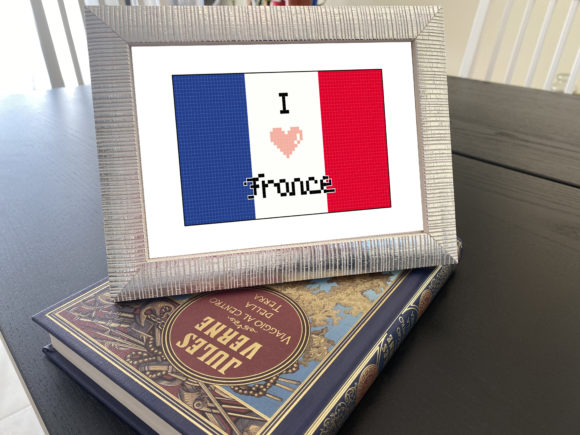
As an embroidery designer working with small businesses on their branded merchandise, I regularly evaluate patterns like this Flag of France Cross Stitch Pattern. The first question I ask is not about decoration, but about function: how does this design translate into a tangible asset for a brand’s identity? Based on the provided information, this pattern presents a classic, straightforward representation. Its potential for business use lies in its clean symbolism and the noted flexibility—the central writing can be omitted. This immediately suggests a design that can be adapted, which is crucial for commercial embroidery projects where simplicity and clarity often win.
Visual Personality and Brand Alignment
The Flag of France Cross Stitch Pattern inherently carries a sense of heritage, elegance, and bold nationalism. For a business, this translates into a design that feels classic and confident. Whether a small café with French-inspired pastries, a boutique importing European goods, a creative studio with a minimalist aesthetic, or a local business wanting to express a connection to French culture or values, this pattern offers a recognizable emblem. The fact it was made with professional cross-stitch software suggests a baseline of technical quality, which is a good start. The visual output would likely be crisp, with the distinct vertical stripes creating a strong, bold statement even at smaller scales. It leans more premium and classic than playful or rustic, making it suitable for businesses aiming to project trust and established professionalism.
Real-World Application for Small Business Merchandise
Let’s walk through real scenarios. Imagine a boutique wanting to create a limited-run of tote bags for loyal customers. This Flag of France Cross Stitch Pattern, embroidered as a patch or directly onto the bag fabric, acts as a sophisticated mark of origin or inspiration. For a bakery, an apron embroidered with this design (without the central writing for a cleaner look) could become part of the staff uniform, subtly reinforcing a French culinary theme. A pet brand with a French name could use a small version as a chest logo accent on staff polo shirts.
For embroidered patches specifically, this pattern is promising. The strong color blocks—blue, white, red—offer excellent thread color contrast, which is vital for patch visibility. A patch based on this design could be applied to caps, work shirts, or as a product packaging accent on handmade goods. For Etsy sellers or craft businesses, this digital embroidery file could be used to create finished products like branded patches for sale, or as a decorative element on handmade items, adding perceived value through detailed craftsmanship. It could also serve in printable mockups to visualize a product line before committing to physical production.
Cap Embroidery and Sleeve Details
On a cap front, the vertical orientation of the flag’s stripes is interesting. It would create a distinctive, tall design. Care must be taken regarding stitch density and size—a very small version on a curved cap surface might lose the integrity of the stripes if the pattern isn’t optimized for that scale. Testing at the intended small patch size is essential.
Tote Bag Marks and Apron Designs
For larger applications like tote bags or aprons, the design can become a more prominent feature. The bold colors stand out well against most fabric textures. It’s a design that would maintain visual consistency across different merchandise items, from an apron to a customer gift like a branded handkerchief.
Careful Considerations for Production
While the pattern has strengths, its application requires professional diligence. The areas needing careful evaluation are primarily scale and context. On tiny lettering (if the writing is included), high stitch density in the color blocks could make a small patch overly stiff. Detailed outlines must be checked for clarity when reduced. Embroidery on dark uniforms would require possibly altering the background or using a very bright white thread to maintain the flag’s fidelity.
Items destined for frequent washing, like staff uniforms, need a robust embroidery construction. Using proper stabilizer during the machine embroidery process is non-negotiable to prevent puckering or thread breakdown over time. Furthermore, the fabric texture matters—a rough canvas tote bag versus a smooth cotton apron will present the design differently.
Impact on Brand Identity and Customer Perception
Using the Flag of France Cross Stitch Pattern on merchandise goes beyond decoration. It injects a specific narrative into your brand identity. It can enhance customer recognition—the flag is globally understood. For a business, this can signal quality, a particular aesthetic, or cultural authenticity, fostering customer trust. It elevates the perceived value of a simple tote bag or apron from a generic item to a branded, seemingly handmade product. This engagement is powerful; customers often connect more deeply with products that carry a story told through thoughtful design.
However, consistency is key. This design should be compared beside your other design assets. Does it complement your logo, your typography, your overall visual theme? If it feels like an isolated element, it might confuse rather than strengthen your brand.
Practical Designer Notes for Business Use
Before any production, here is my standard review protocol for a pattern like this:
- Test in Black and White First: Convert the design to grayscale in your software. This checks if the form holds without color, which is crucial for understanding its fundamental structure.
- Check Small Patch Size Feasibility: Run a test on your machine at the smallest intended size (e.g., for a cap). Does the detail hold? Are the stripes distinct?
- Review Thread Color Contrast: Physically compare the suggested thread colors (blue, white, red) against your actual garment colors. On a navy shirt, the blue stripe might disappear.
- Inspect Spacing and Hoop Size: While specific counts aren’t provided, ensure the pattern’s dimensions fit comfortably within a standard hoop for your target item without awkward truncation.
- Test on Real Fabric: Never rely on the digital file alone. Stitch a sample on the exact fabric you’ll use for uniforms, bags, or aprons.
- Create a Mockup for Client Approval: If you’re the embroiderer for a business, create a visual mockup for their approval. This avoids misunderstandings.
- Confirm Commercial Licensing: The description notes the pattern is part of a collection. It is imperative to verify the license terms explicitly allows for commercial embroidery use, resale of embroidered products, and business branding before you proceed. Do not assume.
In summary, the Flag of France Cross Stitch Pattern is a strong, classic graphic with clear business potential for brands aligned with its symbolism. Its adaptability and bold color scheme make it a candidate for various custom apparel and merchandise applications. Success, however, hinges on meticulous testing for scale, context, and licensing, ensuring this illustration becomes a professional asset, not just a decorative graphic. For the small business owner looking to add a touch of elegant, recognizable craftsmanship to their merch, this pattern, when executed correctly, could be a valuable addition to their branded toolkit.