Bee with Floral Cross Stitch Pattern
First Impression at the Design Desk
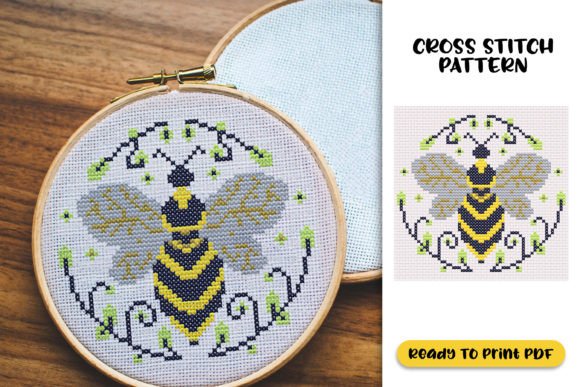
When I first pulled up the Bee with Floral Cross Stitch Pattern on my screen, I immediately pictured it glowing under the warm lights of a market stall. The composition feels both playful and intentional. A plump, sweet bee hovers among soft scattered blooms—nothing explosive or chaotic, just gentle balance. The stated size of 60 x 60 stitches fitting neatly into a 6 x 6 inch square on Aida 10 count fabric gives me confidence that this will sit perfectly on a standard 4x4 or 5x7 hoop when adapted for machine embroidery. The curved wings and tiny petal details read clearly even at a glance, which is essential in a noisy craft fair environment where buyers scan with their eyes in less than three seconds.
For a design selling as a Graphics type under Cross Stitch Patterns, I expected a flat chart. But the included colour guidance—referencing DMC threads—tells me this carries a thoughtful, premade palette. That translates into serious time savings for any Etsy seller or small shop product builder who doesn't want to play guessing games with thread matching. The mood is undeniably giftable: cottage-chic, a bit farmhouse, but with enough modern crispness to appeal to younger shoppers hunting for handmade product charm.
Tote Bags and Market Totes
A tote bag design featuring this pattern is an obvious crowd-pleaser. At 6 inches tall, the motif commands attention on the front pocket of a canvas tote without overwhelming the panel. I'd stitch it slightly off-centre toward the bottom so the bee and florals have a stealthily elegant feel. On natural undyed cotton, the DMC-suggested colours will pop without fighting the fabric. Buyers at outdoor summer fairs gravitate toward anything with a liveable, botanical vibe—this pattern fits that brief effortlessly.
Aprons and Kitchen Towels
The Bee with Floral Cross Stitch Pattern truly belongs on a linen-blend apron. Imagine the bee hovering just above the waistline with a tiny trailing spray of leaves—it becomes an instant talking piece. Tea towel embroidery calls for crisp, airy designs that don't feel heavy against the fabric. Here, the thread colors will read beautifully against cream or oatmeal backgrounds, adding a gentle pop without screaming for attention. For commercial embroidery purposes, I'd digitise the bee as a solid fill with minimal gradient to keep stitch time short and the look consistent across a batch of apron embroidery pieces.
Embroidered Patches and Caps
Tiny but mighty—this design makes a wonderful embroidered patch. The 60x60 stitch footprint translates nicely to a 2-3 inch finished patch if you scale down slightly, but I advise caution. Fine petal outlines and the bee's antennae could close up if reduced too aggressively. On a curved cap surface, I'd stabilise aggressively and choose a low-profile outline stitch to prevent any bobbling. Done correctly, a cap with this patch becomes an impulse buy for gardeners and bee lovers.
Pillow Covers and Fabric Pouches
For a market display, a few linen pillow covers featuring the Bee with Floral Cross Stitch Pattern can single-handedly elevate your entire booth. The 6-inch design fills a corner of a 16-inch pillow sham sweetly without looking sparse. Stitch it on duck cloth pouches, and you have a high-margin accessory that photographs like a dream for Etsy listings. Every sales season, I look for one pattern that works across pouches and pillows—this one makes the cut.
Clarity at a Glance
One of the strongest assets of this pattern is its immediate readability. In a market where buyers glaze over busy, detailed work, the shape of the bee and the gentle hollows in the flowers remain distinct. This means it holds visual power as a craft fair product even from 8 feet away. At an indoor show with less-than-perfect lighting, that recognisable silhouette draws buyers toward your table.
Small Accent vs Focal Design
The Bee with Floral Cross Stitch Pattern works as both. On a tote, it can serve as the dominant focal point. On a garment, it shifts effortlessly to a smart breast pocket accent or a back-yoke detail. This flexibility makes it repeatable for batch production because you aren't locked into one kind of finished product. I appreciate how the design assets lend themselves to multiple placements without losing identity.
Photography and Online Listings
Products bearing this pattern photograph with authentic contrast. The bee's dark body and bright florals hold depth even under simple flat-lay lighting. For Etsy seller product shots or website galleries, I always recommend creating at least one real mockup and one printable mockup showing texture. Use a neutral textured surface, natural window light, and a touch of greenery nearby—the design complements organic settings.
Batch Production Friendliness
Because the colour palette is concise and the stitch area predictable, I can cut a dozen pieces of fabric, hoop them in quick succession, and stitch the same file without constant thread changes. This is a huge win for handmade market prep when you're under deadlines. The pattern's consistency reduces decision fatigue, keeping my commercial embroidery output tight and uniform.
Watch Those Tiny Details
Even at the recommended 6-inch size, the bee's legs and the inner petal shading contain portions that could turn into invisible dots on heavily textured fabric. Avoid thick terry towels unless you're prepared to increase the size or use a knock-down stitch technique. On slubbed linen, test first to ensure the thread doesn't sink and swallow the tiny antennae.
Stitch Density and Fabric Texture
If digitising for machine embroidery, run a test on the exact fabric you'll sell. High stitch density areas around the bee's body can create a stiff puckered patch on lightweight cotton. Adjust pull compensation and underlay to allow the fabric to breathe. For Aida cross-stitch, this isn't an issue—but on a machine embroidery design adaptation, it's critical.
Dark Fabric Pitfalls
The pattern relies on light, cheerful hues. Placing it on deep navy or charcoal fabric will mute the florals unless you re-map the palette to brighter tones. As-is, it sings on cream, soft white, oatmeal, and blush. I'd limit my dark-fabric experiments to jet-black totes only if I add a bright outline around the bee.
Curved Surfaces and Hooping
Caps get tricky. The wingspan of the bee, though modest, still requires a flatable area. Use a curved cap frame and, if possible, move the design slightly lower on the crown to avoid the stiff front seam. For hoop size, a 5x7 hoop will easily accommodate the 6-inch motif, but confirm actual stitch boundaries before you batch out a dozen caps.
Visual Appeal in the Booth
I often arrange my booth samples by mood—bright corner, neutral zone, whimsical section. The Bee with Floral Cross Stitch Pattern anchors a nature-inspired collection beautifully. Paired with a herb bundle, some honey sticks, or a few seed packets, it tells a story that makes customers stop and smile. Buyers reach for designs that feel connected to real-life pleasures, and this pattern relates directly to gardens, summer, and gentle hobbies.
Handmade Quality and Brand Consistency
Because the design looks clean but not sterile, it reflects the hand of a maker without appearing amateur. For small shops building a cohesive handmade product line, the pattern can tie together totes, kitchen textiles, and gift sets under a single visual theme. That brand consistency helps buyers remember your booth long after the show ends.
Buyer Engagement and Impulse Sales
At the core, shoppers purchase emotion. A bee design hints at warmth, pollination, sweet things, and slow living. Priced under $25 on a tea towel or $35 on an apron, this pattern converts hesitating browsers into buyers. I've seen similar designs sell out at morning markets because they feel curated rather than mass-produced. The Bee with Floral Cross Stitch Pattern carries that same boutique energy.
Pre-Production Checklist from an Embroidery Designer
Before I stamp this as "market-ready," I run through my standard workflow. This pattern is no exception.
- Test on scrap fabric first, ideally a remnant of your actual product material. Check thread tension and trim precision.
- Review thread contrast using DMC colour suggestions. Hold the stitched sample under both show lighting and dim home lighting to verify legibility.
- Confirm hoop size and stabilizer combination. A cutaway stabilizer often works best for totes; a tearaway may suffice for flat tea towels.
- Inspect stitch density visually and by hand-feel. Hard, bulletproof patches won't sell as apparel accents.
- Create at least one real mockup in your bestselling product format and photograph it properly. Use that image everywhere.
- Compare fabric colors on at least three backgrounds (light, off-white, natural) to pick your production standard.
- Confirm commercial licensing before selling finished products. Since this is a Graphics type downloaded under Cross Stitch Patterns, check the designer's terms for physical goods sales.
Why This Pattern Earns a Spot in My Booth
Not every digitised file or cross-stitch chart makes it through my selection filter. I need designs that are kind to my production schedule, magnetic to buyers, and flexible across products. The Bee with Floral Cross Stitch Pattern checks those boxes. It offers emotional warmth, clear sizing guidance with the 60 x 60 stitches and 6 x 6 Inch canvas, and a thoroughly workable palette. Whether I'm stitching a single gift piece or a full run of tea towel embroidery for a seasonal pop-up, I can rely on this design to perform without constant tweaking.
For any digital embroidery file user, craft fair product builder, or creative entrepreneur wanting a versatile nature-themed asset, this pattern merits a close look. Stitch it up, prop it beautifully, and watch it become one of your table's quiet bestsellers.