Bee Cross Stitch Pattern: A Boutique Designer Review
First Look at the Bee Cross Stitch Pattern
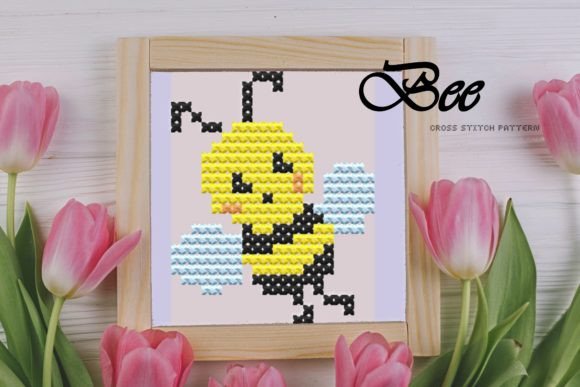
I opened the Bee. Cross Stitch Pattern file on a quiet Tuesday morning, with a fresh stack of neutral sweatshirt blanks waiting on my cutting table and a boutique client expecting a spring collection concept by end of week. The pattern itself is compact and unassuming. Twenty stitches wide by twenty-five stitches tall. Four thread colors. A tiny bee motif that, according to the product notes, makes a lovely Easter decoration. My immediate thought was not about Easter decor at all. I saw a delicate, unexpectedly charming accent piece that could anchor an entire seasonal apparel capsule for the right brand.
Cross stitch patterns rarely cross over into apparel thinking. Most embroidery designers live in the machine embroidery world where stitch density, underlay, and pull compensation dominate every decision. But a good designer reads the Bee. Cross Stitch Pattern differently. You look at the bone structure of the design. The pixel-like grid of cross stitches gives this bee a built-in geometry that translates beautifully to textured apparel surfaces. The small footprint means it will sit quietly on a chest placement without shouting. Four colors keep the palette restrained and easy to match across different fabric dye lots.
Reading the Design Through a Sweatshirt Lens
When evaluating any design asset for custom apparel, I ask one question before anything else: what does this design feel like on a finished garment? The Bee. Cross Stitch Pattern has a homespun, handcrafted personality that lands somewhere between rustic and precious. It is not modern or minimalist in the stark sense. It is not bold streetwear. It carries a gentle, feminine, slightly nostalgic quality that makes me think of slow Sunday mornings, fresh bakery windows, and the kind of boutique that wraps purchases in tissue paper.
For a boutique brand building identity around softness, warmth, and approachable luxury, this tiny bee hits a sweet spot. On an oversized oatmeal crewneck, stitched in muted honey gold and soft charcoal, the design becomes a signature mark rather than a graphic statement. On a pale lavender hoodie, it reads as playful and seasonal without tipping into juvenile territory. That balance is hard to find, and the Bee. Cross Stitch Pattern offers it in a remarkably small package.
Four Thread Colors and the Art of Restraint
The description confirms DMC threads were used, and only four colors are needed. For a handmade product or hand-stitched accent piece, this keeps the supply list short and the entry barrier low. For a machine embroidery design adaptation, four colors mean fewer thread changes, faster stitch times, and cleaner production runs. When I convert this pattern into a digital embroidery file for commercial use, those four colors become a tightly edited palette that I can test against five or six sweatshirt fabric swatches in under an hour.
Color contrast matters enormously on textured fabrics. French terry and fleece absorb thread differently than flat cotton. A design with too many subtle tonal shifts will lose definition after washing. The Bee. Cross Stitch Pattern likely uses a dark outline color, a warm body color for the bee, and perhaps two accent tones for wings or floral details. That high-contrast structure reads clearly even on loopback terry and survives the softening process that boutique sweatshirts go through before sale.
Placement Possibilities Across a Sweatshirt Collection
With a design size of only 20 by 25 stitches, the finished embroidery footprint stays small. On Aida cloth, this might be a one-and-a-half-inch square. Converted to machine embroidery design formats and scaled up slightly for apparel, I project a finished width of roughly two to three inches depending on stitch interpretation. That compact size opens up placement options that larger designs cannot access.
Chest Placement on Crewnecks and Hoodies
A left-chest bee on a sweatshirt reads as a quiet brand mark. It feels intentional without being promotional. For boutique brands that sell through Etsy or their own small shop sites, a recognizable chest emblem builds visual memory. Customers come back for that tiny bee. They photograph it in flatlays. It becomes part of the brand identity in a way that a large back print rarely achieves.
Sleeve and Cuff Accents
One bee on a sleeve, stitched near the cuff ribbing, transforms a blank sweatshirt into a styled piece. On dark heather grey or charcoal fabric, the thread colors pop gently. On pastel pink or butter yellow, the design blends into a tonal story that feels curated and expensive. Sleeve placements also photograph well in lifestyle product photography, where hands wrap around coffee mugs and the embroidery catches side light.
Back Neck Signatures
Some boutique brands place a small design at the back neck, just below the collar. The Bee. Cross Stitch Pattern works here because it does not add bulk that irritates the neckline. A tiny bee at the nape of the neck becomes a discovery detail that customers notice when a friend wears the piece. That kind of surprise detail builds word-of-mouth engagement faster than any marketing copy.
Stabilizer Strategy and Fabric Texture Reality
Stitching on sweatshirt fabric demands the right stabilizer choice. Medium-weight cutaway stabilizer supports dense thread without sagging after repeated washing. The Bee. Cross Stitch Pattern, even if stitched as a hand-embroidery accent, benefits from a layer of tear-away or wash-away stabilizer behind the fabric to prevent puckering on knit surfaces. For machine embroidery production, I would test a fusible poly mesh stabilizer first, then evaluate the drape after two wash cycles.
Stitch density needs careful attention when converting a cross stitch grid into satin or fill stitches. Cross stitches have natural gaps. Machine embroidery fills do not. Without intentional density adjustment, a converted design can become stiff and heavy on the fabric. The Bee. Cross Stitch Pattern, with its small size and limited color count, gives me room to experiment with open fills, bean stitch variations, and decorative run lines that mimic the texture of hand cross stitch without the bulk.
Washing Durability and Commercial Confidence
A boutique brand lives or dies on repeat purchases. If embroidery fails after five washes, the brand loses customer trust permanently. The Bee. Cross Stitch Pattern uses four DMC thread colors, and DMC cotton threads hold up well to washing when properly stitched and stabilized. For machine embroidery production, polyester thread offers better bleach resistance and colorfastness over time. I would color-match the DMC palette to high-quality polyester embroidery threads before running production.
The small stitch area also works in favor of durability. Large embroidery designs with heavy stitch counts pull on fabric over time, creating ripples and distortion. A tiny bee on a sweatshirt chest experiences far less mechanical stress. Customers can machine wash on gentle cycles and tumble dry low without destroying the thread integrity. That reliability builds buyer trust and reduces return rates.
Mockup Previews and Etsy Listing Presentation
Digital sellers and Etsy sellers depend heavily on mockup presentation. A design like the Bee. Cross Stitch Pattern photographs beautifully on folded sweatshirts, against dried flowers, on wooden tabletops, or styled with ceramic mugs and linen textiles. The bee itself communicates spring, growth, warmth, and gentle energy. Those emotional cues transfer directly to the product listing and influence purchase decisions faster than any bullet point about fabric weight.
When I prepare printable mockup assets for a boutique launch, I place the bee design on at least three fabric colors: cream, dusty blue, and a warm blush or terracotta. The four thread colors need to harmonize across all of them. If the design works on all three backgrounds, it clears the versatility test and earns a place in the collection.
Brand Identity and the Case for Tiny Designs
Many small clothing brands chase bold graphics and large back prints. There is a quieter lane occupied by brands that understand restraint. The Bee. Cross Stitch Pattern belongs in that lane. It rewards close looking. It does not compete with the wearer. It flatters the fabric rather than overwhelming it. For a boutique sweatshirt drop built around comfort, softness, and everyday beauty, a tiny bee on the chest or sleeve says exactly the right thing.
The design also opens up category expansion. A bee that works on a sweatshirt also works on a canvas tote, a linen apron, a baby blanket, or a set of cloth napkins. Boutique brands that start with apparel often branch into home goods as they grow. Choosing design assets with that flexibility in mind protects the investment and supports long-term brand cohesion.
Practical Checks Before Production Begins
Before committing any design to a production run, I review a checklist that has saved me from costly mistakes more than once. Apply it to the Bee. Cross Stitch Pattern before you order blanks or cut fabric. Confirm the final stitched dimensions and create a physical sample on the exact garment you plan to sell. Test thread colors under natural and studio lighting. Wash the sample three times and photograph it next to an unwashed control piece. Check for fading, pilling, and distortion around the embroidery area.
If you are converting from a cross stitch pattern to a digital embroidery file for machine production, verify that your digitizer understands the difference between decorative cross stitch aesthetics and machine embroidery structure. The finished design should capture the charm of the original pattern without sacrificing production efficiency or wearability. Ask for a sewout before accepting the file.
The Bee. Cross Stitch Pattern as provided is geared toward hand stitching by beginners and children. Its petite 20 by 25 stitch canvas and four-color palette make it accessible and quick to finish. Repurposing it for commercial apparel requires thoughtful adaptation, testing, and professional judgment. But the core design is strong enough to justify that effort.
Final Impressions From the Design Table
I keep coming back to the same image: an oversized cream sweatshirt, a tiny golden bee stitched over the heart, and the kind of quiet confidence that makes a customer reach for the same piece every week. The Bee. Cross Stitch Pattern does more than its size suggests. It carries a mood. It holds a season inside those twenty by twenty-five stitches. For the right boutique brand, a small shop product built around this design could become a perennial spring favorite that customers gift, photograph, and return for in new colorways year after year.
If you are an Etsy seller, an apparel decorator, or a handmade business owner looking for a design that whispers rather than shouts, evaluate this pattern with your fabric swatches laid out and your brand story clear in mind. The bee might be small, but the brand impact can stretch far beyond the stitch count.