A Designer's Review of the Skull and Sword Cross Stitch Pattern
As an embroidery designer who works both for my own handmade brand and for commercial clients, I constantly evaluate digital patterns for real-world application. My process isn't about whether a pattern is merely "cool"; it's about whether it can translate into a durable, sellable, and visually striking finished product. When considering the Skull and Sword Cross Stitch Pattern from Creative Fabrica for a potential project, I approached it with that exact mindset. This review is based on the data provided and my experience applying similar designs to actual items.
First Impression: Gothic Detail with Commercial Potential
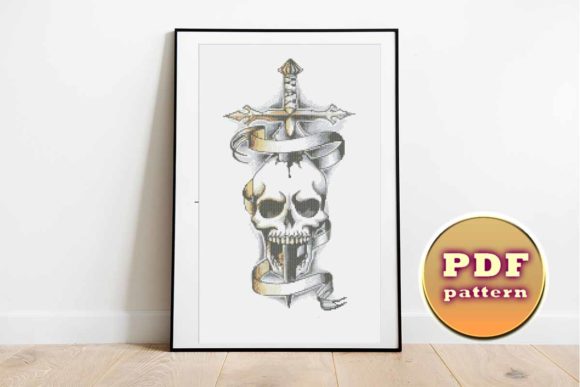
The Skull and Sword Cross Stitch Pattern presents a clear, modern gothic aesthetic. The 150 by 246 stitch count and the use of 16 colors suggest a design with significant detail and shading, rather than a flat, simplistic graphic. This creates a specific "stitching personality": it's a decorative piece that leans towards horror or dark fantasy themes, making it a niche but potentially high-value item for target audiences. It naturally fits projects like pillow covers for a themed room, tote bags for alternative fashion, or as a striking centerpiece on a sweatshirt. The size, at approximately 27cm by 44cm on 14-count fabric, means it's a substantial project—not a quick weekend stitch—which impacts both its perceived value and the time investment for a maker.
Real Project Performance: From Pattern to Product
Translating any pattern from a digital file to a physical product requires careful thought. Here’s how I considered using the Skull and Sword Cross Stitch Pattern across various applications.
Custom Apparel & Home Decor
For custom apparel like sweatshirts or caps, the size is a primary consideration. The finished dimensions are quite large for a cap, but would work well as a back-piece on a sweatshirt or jacket. On dark fabric, the provided color palette would need careful evaluation; contrast is key. For home decor like pillow covers or aprons, the scale is excellent. However, on items like kitchen towels or baby blankets, the theme is obviously unsuitable unless targeting a very specific, adult-oriented gift market. For Etsy listings or craft fair products, this pattern could create a standout product that attracts a dedicated customer base.
Practical Embroidery Considerations
The listed 16 colors indicate areas of shading and blending. In practice, this means some sections will have dense stitch areas. On stretchy fabric or curved cap surfaces, proper stabilizer is non-negotiable to prevent distortion. The detailed areas, particularly around the sword and skull features, will require attention to stitch density to maintain clarity. Before committing to a final product, I always test on scrap fabric using the same material and hoop size I plan for the project. This reveals any issues with small details or color contrast.
Commercial & Handmade Value Impact
Using a well-defined pattern like this affects product value significantly. A clean, detailed finish enhances buyer trust and handmade presentation. For a brand specializing in gothic or fantasy themes, it ensures brand consistency. As a personalized gift, it becomes a memorable, one-of-a-kind item. Furthermore, such a detailed piece lends itself to strong product photography, directly boosting customer engagement in online shops. It could also be used to create embroidered patches, though the size might make it a statement patch rather than a small accent.
Essential Pre-Use Checklist for Professionals
Before using any Creative Fabrica embroidery design for commercial purposes, a disciplined review is crucial.
- Confirm File Details: The product information specifies a PDF and dimensions for 14-count fabric. Always download and open the file to verify the chart clarity, color symbols, and any included instructions.
- Review Licensing: Check the Creative Fabrica product page for the specific license terms related to selling finished items. This is a fundamental step for any digital product seller.
- Compare Fabric Mockups: Mentally, or with a quick sketch, visualize the pattern on both light and dark fabric. Does the color block palette work in both scenarios? You may need to adapt colors for optimal contrast.
- Plan Your Hooping: The final size dictates your hoop needs. Ensure you have a hoop that can accommodate the entire design area comfortably for a smooth stitching process.
- Inspect After Stitching: Once a test piece is complete, meticulously inspect small details. Are the defining lines of the sword and skull crisp? This final check determines if it's ready for a customer-grade product.
Final Thoughts for the Working Designer
The Skull and Sword Cross Stitch Pattern is a specialized design with strong potential in its niche. It is not a universal, all-purpose pattern, but for designers and makers targeting the horror, fantasy, or alternative markets, it provides a detailed, ready-to-use asset. Its value lies in its complexity and clear theme, which can translate into high-perceived-value handmade goods. The practical considerations—size, color count, and fabric suitability—are paramount. For use on tote bags, sweatshirts, or decor items like pillow covers, it can perform very well provided standard professional practices are followed: testing, proper stabilization, and adherence to licensing.
My advice is to treat it as a project for a specific customer or product line, not as a casual stitch. If the theme aligns with your brand or a client's request, and you've done your due diligence on the product page and with a fabric test, it can become a compelling part of your commercial embroidery or handmade offering. Always remember, the success of a digital embroidery file like this ultimately depends on the care and skill applied during its transformation into a physical, sellable product.